How to Rank in ChatGPT: 5 Steps to Get Your Brand Named
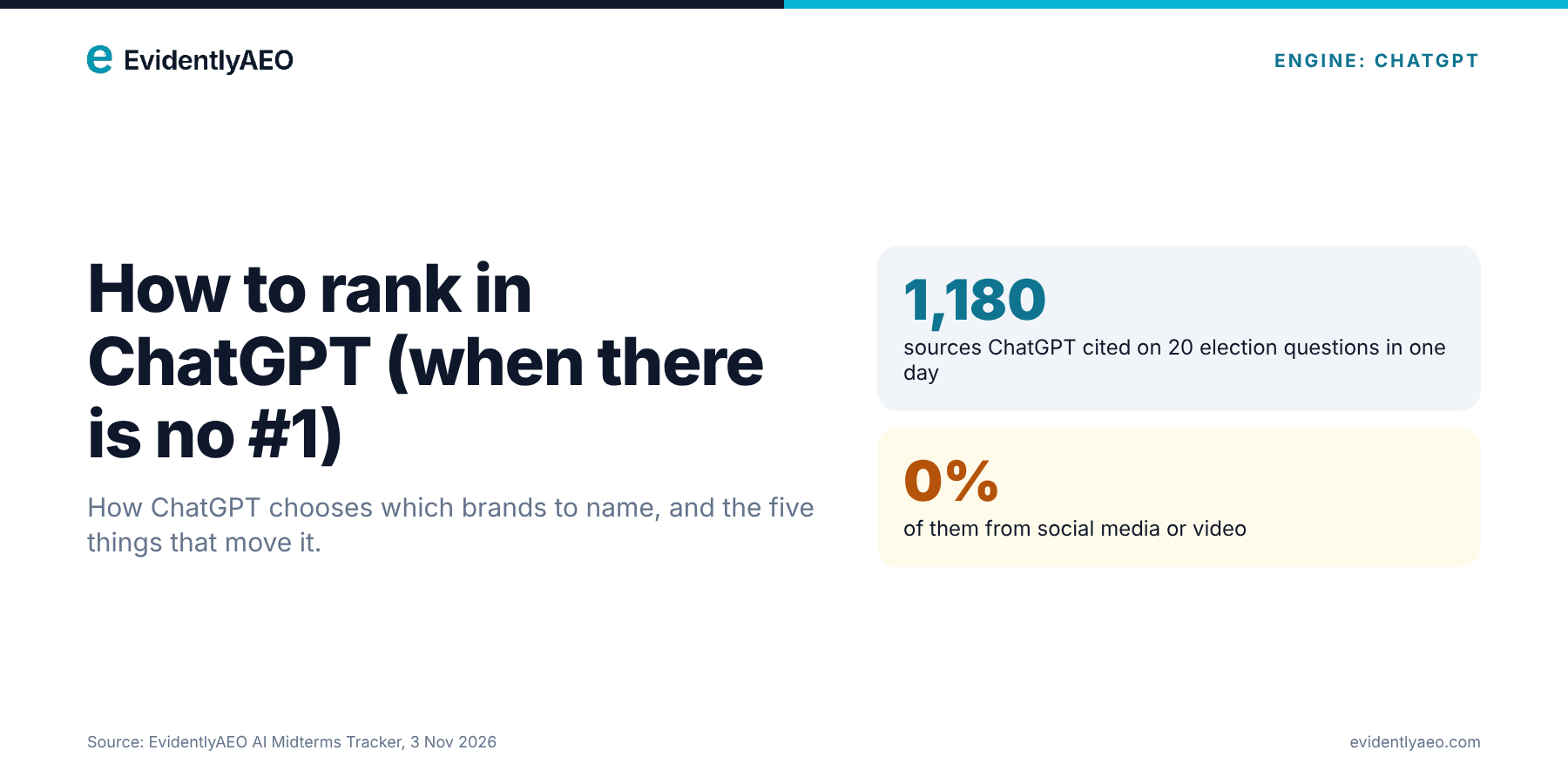
Short answer: There is no #1 spot in ChatGPT to rank for. ChatGPT writes a new answer each time, and it names the brands it already knows from training or finds in a live web search. To show up more often: let OAI-SearchBot crawl your site, answer buyers' questions in the first lines of your pages, keep your facts the same everywhere, get mentioned by sources ChatGPT trusts, and measure how often you appear, not where.
Here's what we saw: when we asked ChatGPT 20 questions about the US midterms on one day, it cited 1,180 sources. Not one of them was a social network or video site. Google's AI Mode, given the same questions, took 36% of its sources from social and video (our election-eve tracker).
So ChatGPT has its own taste in sources, and it is not the same as Google's. Below: the two ways ChatGPT decides which brands to name, and five steps that make yours one of them.
Can you rank #1 in ChatGPT?
Not in the way you rank in Google. A Google result page holds a position; a ChatGPT answer is written fresh every time, so the same question can name different brands in a different order an hour later. That's why AI visibility is measured as a rate across many answers, such as "named in 4 of 10 answers", rather than a position. We explain why in No Rank #1 in ChatGPT.
How ChatGPT decides which brands to name
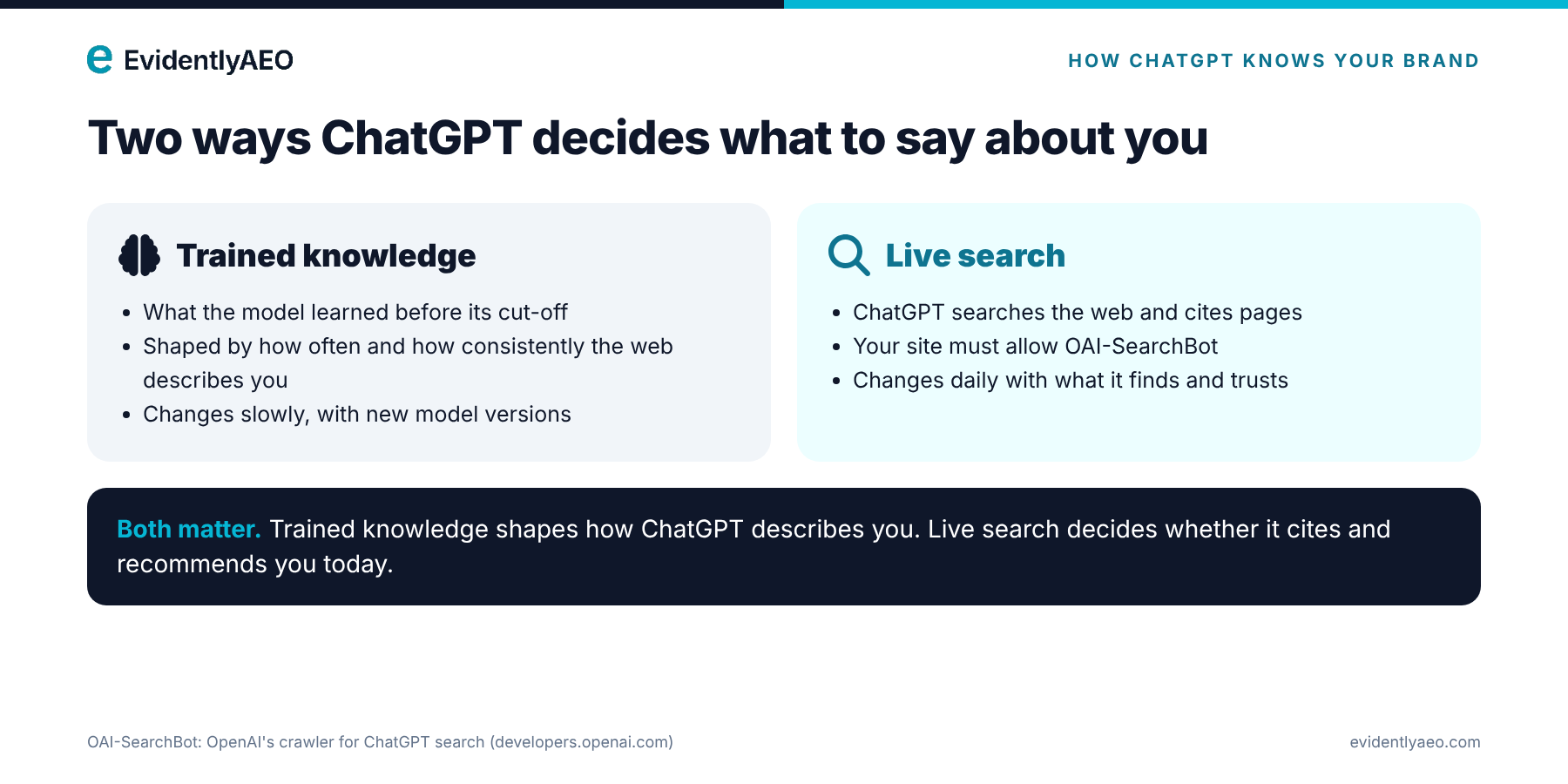
Figure: The two ways ChatGPT decides which brands to name
1. What it already knows (training data). For many questions, ChatGPT answers from what it learned during training: brands that were widely and consistently described across the web before its cut-off date. You can't edit this directly. It changes slowly, as new models are trained on a web that mentions you more.
2. What it finds now (live search). When a question needs fresh or specific information, ChatGPT searches the web, reads a handful of pages and cites them. This is the part you can influence this month. It only works if ChatGPT's search crawler can reach your pages and the answer is easy to lift from them.
Both matter. Live search gets you cited next week; consistent mentions across the web are what get you into future training data.
How to rank in ChatGPT: 5 steps
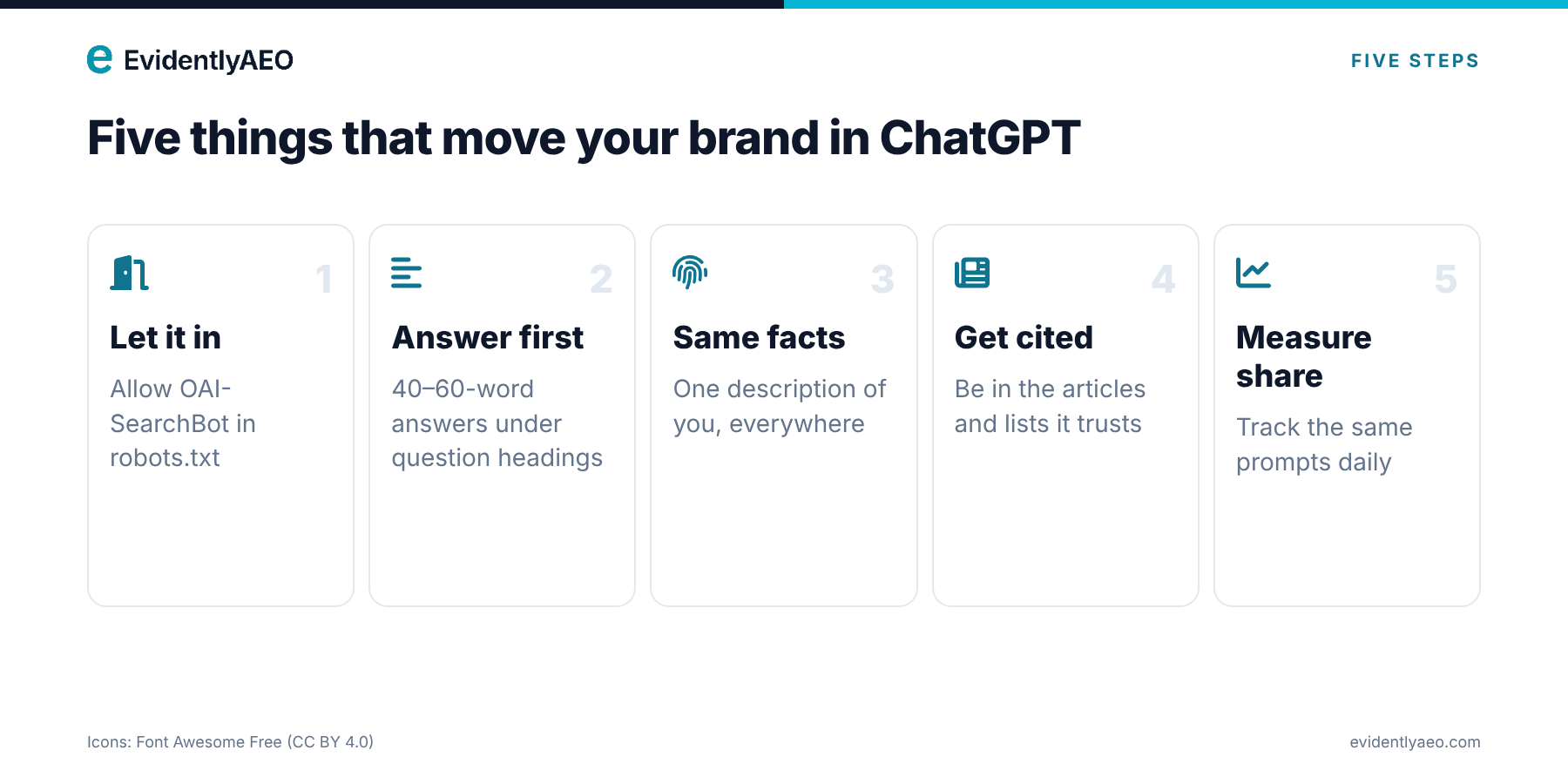
Figure: 5 steps to show up in ChatGPT answers
1. Let OAI-SearchBot crawl your site. OpenAI uses separate crawlers. OAI-SearchBot is the one that powers ChatGPT search; GPTBot is for training, and each is set independently in robots.txt (OpenAI). If OAI-SearchBot is blocked, your pages can't be cited in ChatGPT search answers. OpenAI says robots.txt changes take about 24 hours to take effect.
2. Put the answer first. Start each key page with a one- or two-sentence answer to the question a buyer would ask, then the detail. ChatGPT lifts clear, self-contained statements far more easily than an answer buried in paragraph six.
3. Keep your facts the same everywhere. Your name, what you do, who it's for and your prices should read the same on your site, directories, review sites and social profiles. Conflicting facts make an AI engine less likely to state anything about you with confidence.
4. Get mentioned by sources ChatGPT trusts. In our tracking, ChatGPT leaned on established publishers, reference sites and official pages rather than social posts. For a brand, that means industry publications, comparison and review sites, and partner pages that name you. Find which sources it already cites for your category and aim for those (how to see which sources ChatGPT cites).
5. Measure how often you appear. Ask the same set of buyer questions regularly and track the share of answers that name you, compared with competitors. One check proves little, because answers vary; a few hundred answers show a real trend. Our guide to AI search visibility KPIs covers the formulas.
Why ChatGPT recommends your competitor instead
Usually for one of three reasons: the competitor is mentioned on more of the sources ChatGPT trusts, their pages answer the buyer's question more directly, or ChatGPT can't crawl your site. We go through how to check each in Why ChatGPT Cites and Recommends Your Competitors, Not You.
How to check whether it's working
- By hand: ask ChatGPT your buyers' top 10 questions in a fresh chat, note who is named and which sources are cited, and repeat weekly.
- In GA4: watch visits from chatgpt.com in the AI Assistant channel. Expect undercounting, since many AI visits arrive without a referrer. See How to Track ChatGPT Traffic in GA4.
- With a tracker: run the same prompts daily across ChatGPT and other engines to build a sample big enough to trust. See how EvidentlyAEO does it.
For the full checklist, read How to Improve Your Brand's Visibility in AI Answers, or start with What is AEO?
Frequently asked questions
**How do I rank in ChatGPT?**You can't hold a fixed rank, but you can appear more often: allow OAI-SearchBot, answer questions in the first lines of your pages, keep your facts consistent, earn mentions on trusted sources, and track your share of answers.
**Does ChatGPT use Google rankings?**Not directly. ChatGPT runs its own search and chooses its own sources. In our tracking, its sources differed clearly from Google AI Mode's on the same questions.
**What is OAI-SearchBot?**OpenAI's crawler for ChatGPT search. Allowing it in robots.txt lets your pages appear and be cited in ChatGPT search answers. It is separate from GPTBot, which collects training data.
**How long does it take to show up in ChatGPT?**Live search can pick up a crawlable, clear page within days to weeks. Showing up in answers from training data takes much longer, because it depends on future model updates.
**Does llms.txt help you rank in ChatGPT?**There's no evidence it does. See What Is llms.txt, and Does It Help AI Visibility?
Icons in images: Font Awesome Free (CC BY 4.0).


